Pay out of the savings, not up front.
A share of what each change measurably saves, billed against your real AWS bill for 12 months, and then it stops while the savings carry on.
How it works
Some teams would rather have their spend track results than hours. On this model we take a share of the savings, typically 10% to 30%, with a lower percentage for larger AWS customers.
Our fee for each change ends after its first 12 months, so from that point on you keep 100% of what it saves. It's invoiced monthly and measured automatically from your before-and-after billing data, per change, and a change that saves nothing isn't charged for.
We can also bill through AWS Marketplace, so it comes out of the cloud budget you already have, and we'll agree a cap if you want one.
What it looks like on a real engagement
Here's how a 20% share played out on a FinTech client spending ~$3M/year on AWS, change by change.
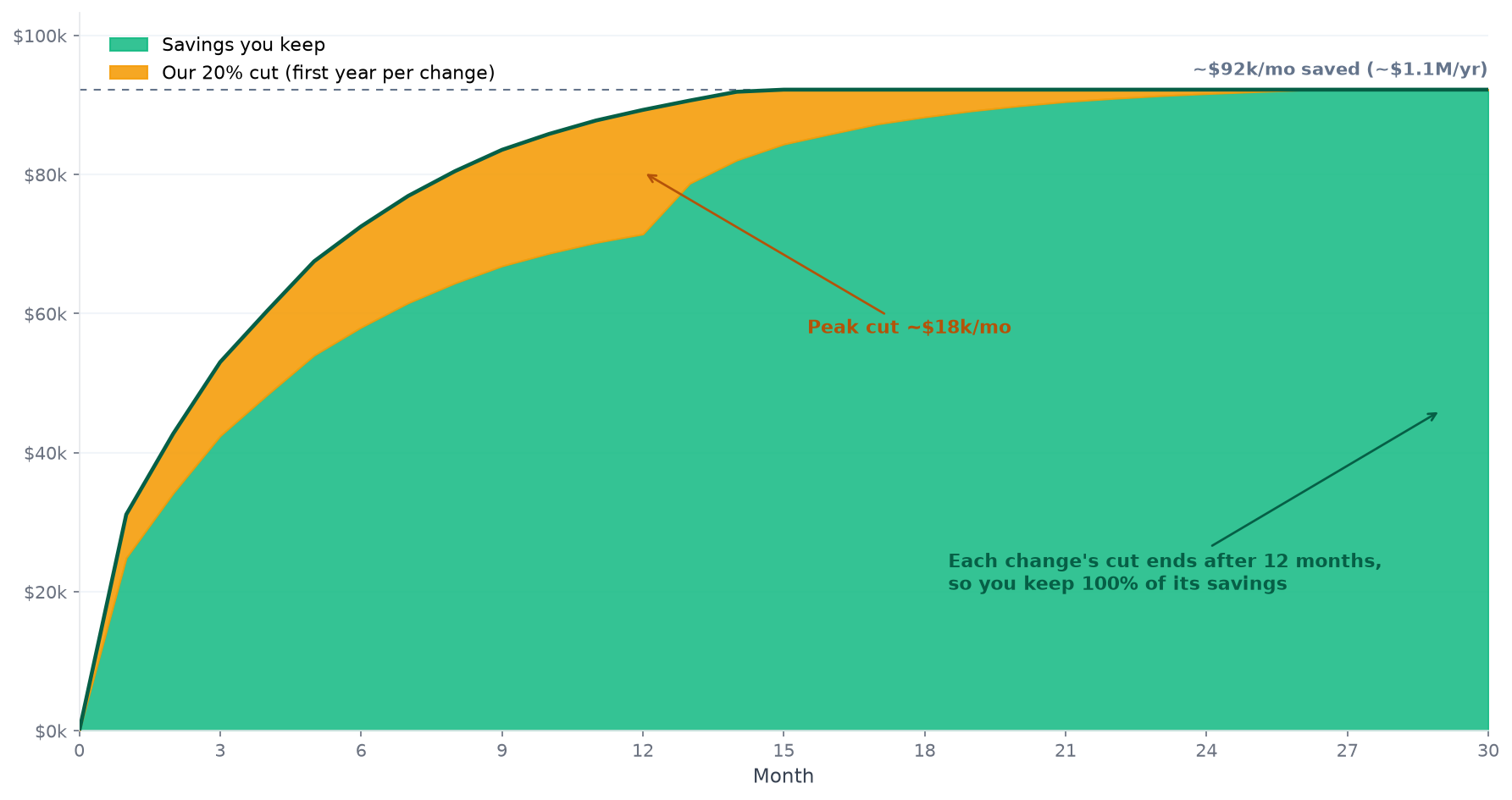
The changes that landed now save about $92,000 a month.
~10%
of the savings we deliver while billing
~$1.1M/yr
you keep, for good, once cuts retire
The cut ramps up as changes land and back down as each change's first year ends. Over those 12 months it works out to about 10% of the savings delivered, and then it goes to zero while the savings stay.
When the other models fit better
A share of savings suits teams who want the spend to follow the result, and it carries the most risk for us, so we tend to reserve it for footprints where there's clearly enough to find.
Most engagements start instead with a scoped project at a flat fee, which is the fastest way to find out whether this works without a budget conversation, and carry on as a monthly retainer. All three are on the engagement models section of the homepage.
Start a conversation
Tell us where AWS costs are getting stuck, and we'll suggest a practical first step.